An Adarivo guide prepared with AI assistance and checked against source records. Share corrections and update suggestions through the contact page.
Looking beyond the stage
Turkish Cypriot folk dance brings social experiences such as celebrations and weddings onto the stage. Look beyond colourful clothing: notice how dancers face one another, respond to changing rhythms and move together. Different groups may arrange a dance with the same name differently. One performance cannot explain the entire tradition.
Karşılama and sirto: two forms of togetherness
Karşılama is a form in which partners face one another; watching and answering each other through movement are features an audience can notice. Sirto is associated with group formation: linked dancers create a circle, with a leader making the shared rhythm visible. Some arrangements include two dancers holding opposite ends of a handkerchief. These forms do not prescribe one immutable choreography; stage arrangements differ between groups. When learning, first follow the repeated shared steps, then hands, arms and direction changes, rather than copying only the fastest figures.
Zeybek and other dances
HASDER’s collected repertoire includes Sarhoş Zeybeği, Abdal Zeybeği, Susta, Mandra and Bardak Oyunu. These names offer a starting point for exploring variety. Check the programme for the dance name; similar movements do not establish its origin or meaning. Stage props can also form part of the storytelling.
Costumes, instruments and rhythm
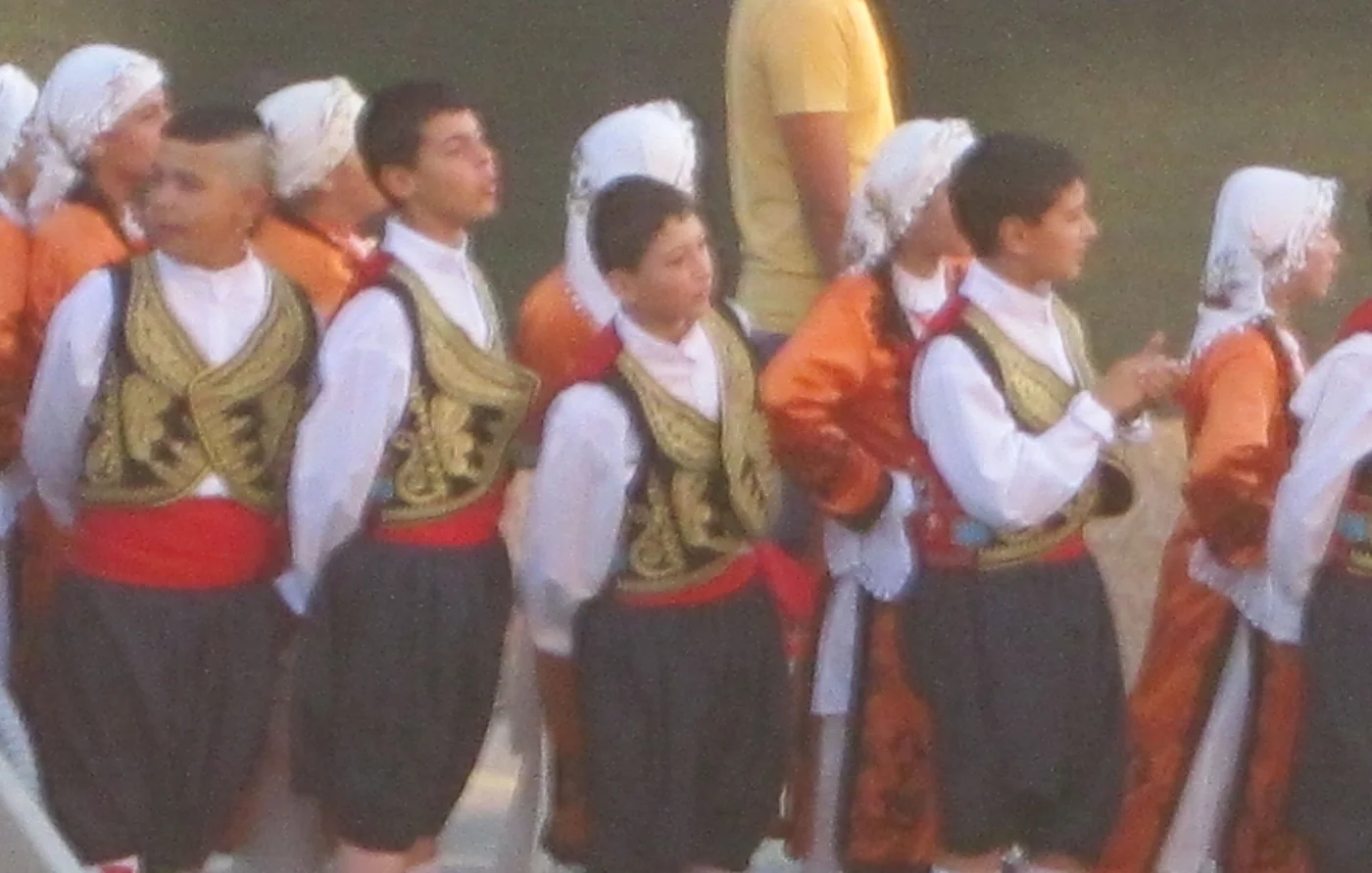
Examples seen in men’s stage costumes include a white shirt, short dark trousers, broad red sash, waistcoat and fez; women’s costumes may feature colourful headdresses, jewellery and dresses. These are stage examples: clothing varies with period, age and social context. Accompaniment can include violin, zurna, davul and darbuka, with accordion or mandolin in some groups. Live music and recorded accompaniment create different presentations. Following the steps against percussion accents helps connect rhythm with bodily movement. No single time signature or instrumental lineup should be assigned to every dance.
Watch and learn respectfully
Follow announcements from municipalities, cultural institutions and dance associations. Confirm times and participation rules in the current programme. Ask permission before taking photographs or videos, do not enter the stage uninvited, and respect children’s privacy when sharing images. A short workshop can offer more context than watching alone; ask whether beginners are welcome.